Contractor Stack · Part 34
Migrating a $2M Contractor’s Stack
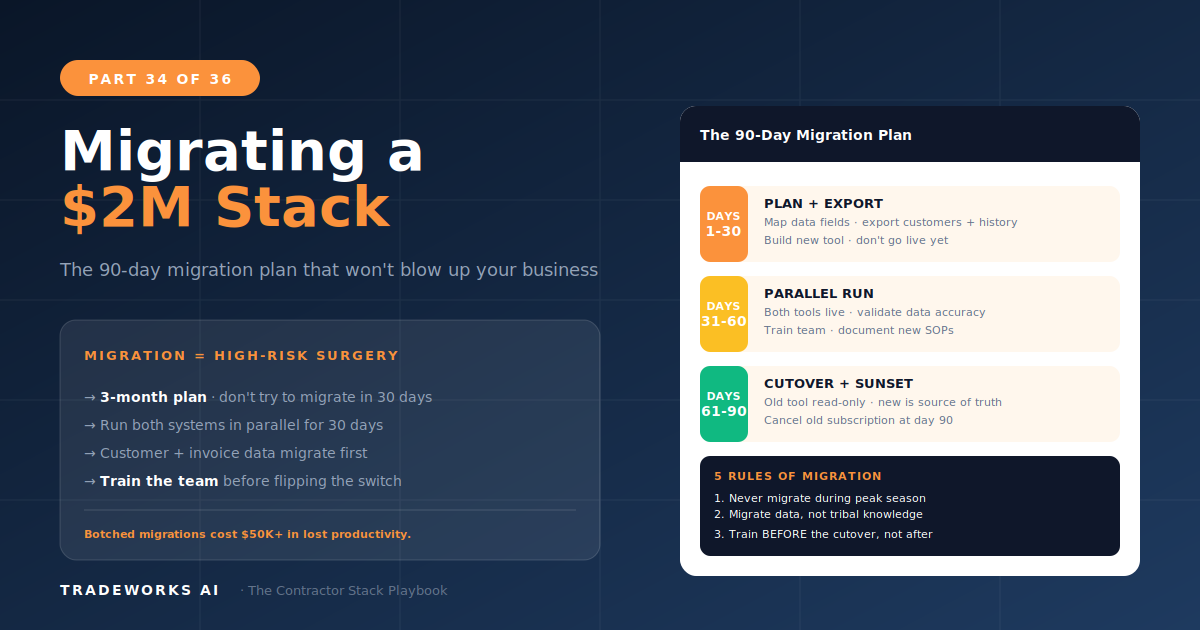
Migrating a contractor’s software stack from one FSM platform to another takes 8 to 10 weeks and costs $5,000 to $15,000 in transition ex...
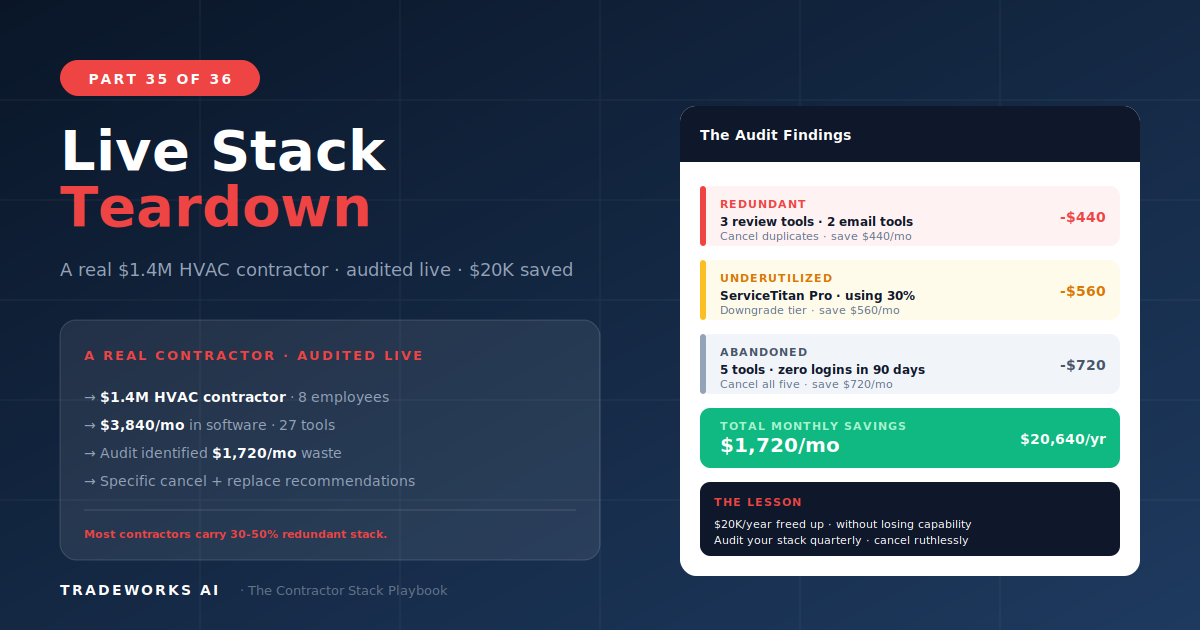
A live teardown of a $1.8 million HVAC contractor’s software stack revealed $518 per month ($6,216 per year) in wasted, redundant, or abandoned subscriptions — plus an additional $200 to $400 per month in underutilized features on platforms the business is keeping. The contractor was paying $1,098 per month across 8 tools. After the teardown, the optimized stack delivers better performance at $595 per month across 6 tools: a 46% cost reduction with improved functionality. This guide walks through the complete teardown process using the Underutilization Audit framework from Part 1, with specific cancel, keep, downgrade, and replace recommendations for each tool.
The Underutilization Audit from Part 1 categorizes every software subscription into four buckets: Essential (used daily, no alternative), Underutilized (paying for premium but using basic features), Redundant (another tool covers the same function), and Abandoned (nobody has logged in for 30+ days). This teardown applies that framework to a real contractor’s stack.
The contractor: a $1.8 million residential HVAC company in the Tampa Bay area with 2 technicians, 1 dispatcher/office manager, and the owner. They have been in business for 7 years and accumulated tools over time without ever auditing whether each subscription was still delivering value.
The most expensive tool in the stack ($490/month for 2 technicians) was operating at approximately 30% of its capability. The team used scheduling, dispatch, and basic invoicing — Stage 2 functions. The pricebook was not built (every estimate was created from scratch). Membership tracking was not configured. Marketing attribution and call tracking were not enabled. The dispatch board’s performance scoring was ignored.
The recommendation was binary: either commit to a 30-day intensive implementation of the features they were paying for (pricebooks, memberships, marketing attribution) or downgrade to Housecall Pro at $149–$299/month and save $191–$341/month. The contractor chose to commit to full implementation with a 90-day deadline to achieve 70%+ utilization. If utilization does not reach that threshold, the downgrade to Housecall Pro becomes the recommendation.
The contractor was paying for both Mailchimp Standard ($75/month) and Constant Contact ($45/month). The Constant Contact account had not been logged into in 4 months — it was the previous office manager’s platform, and nobody canceled it when she left. The Mailchimp account was used to send one newsletter per month with no automation sequences.
The recommendation: cancel Constant Contact immediately ($45/month saved). Replace Mailchimp with ActiveCampaign Lite ($29/month) to gain the automation builder needed for the Re-Revenue Framework sequences (Part 8). Net savings: $91/month with significantly better capability.
The contractor was spending $350/month on Yelp advertising with no call tracking, no attribution, and no way to measure whether a single customer came from the Yelp spend. When asked how many jobs came from Yelp last month, the answer was “I think a few.” At $4,200/year, “I think a few” is not an acceptable ROI measurement.
The recommendation: cancel Yelp advertising immediately. Redirect $200/month to Google Ads with call tracking (ServiceTitan’s built-in call tracking can attribute leads to ad source). Pocket the remaining $150/month. Net savings: $150–$350/month with better attribution on the remaining ad spend.
Buffer ($36/month) had not scheduled a post in 6 months. Calendly Pro ($12/month) duplicated ServiceTitan’s built-in booking. Both were auto-renewing without anyone noticing. Combined savings: $48/month.
The owner used a personal cell phone for all business calls. No call recording for dispute protection. No shared inbox for the office manager to handle calls when the owner was on a job. No after-hours auto-text. This was the only recommendation that added cost: OpenPhone at $15/month. The value (call recording, shared inbox, after-hours capture) far exceeds the cost.
Total before: $1,098/month across 8 tools
Canceled: Constant Contact ($45) + Yelp ($350) + Buffer ($36) + Calendly ($12) = $443/month
Replaced: Mailchimp ($75) → ActiveCampaign ($29) = $46/month saved
Added: OpenPhone ($15) + NiceJob ($75, was missing entirely)
Total after: $595/month across 6 tools (ServiceTitan, QuickBooks, ActiveCampaign, NiceJob, OpenPhone, 1Password)
Monthly savings: $503/month = $6,036/year
Plus: better capability from ActiveCampaign automation, NiceJob review velocity, and OpenPhone call recording
Follow this process quarterly or at minimum annually:
Step 1: Pull every recurring software charge from the last 90 days. Bank statements catch auto-renewals that nobody remembers.
Step 2: For each tool, answer: Who logs in? How often? Which features are active? Which features are available but untouched?
Step 3: Categorize each tool: Essential, Underutilized, Redundant, or Abandoned.
Step 4: Cancel all Abandoned and Redundant tools immediately. For Underutilized tools, set a 90-day deadline: achieve target utilization or downgrade/cancel.
Step 5: Identify gaps: tools you should have but do not (this contractor was missing review management and a business phone).
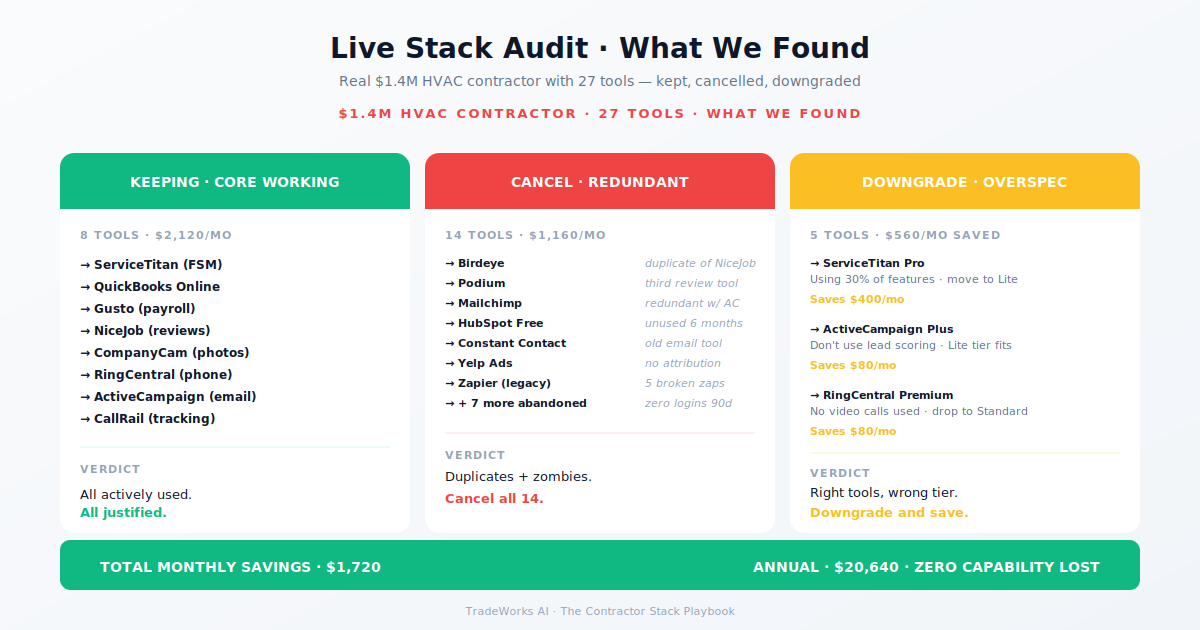
In TradeWorks AI’s experience, the average contractor carries $150 to $500 per month in Redundant or Abandoned software. The larger waste is typically in the Underutilized category: premium-tier tools operating at 20–40% of their capability, which represents $200 to $600 per month in features the business is paying for but not using.
Annually at minimum. Set a January reminder to run the Underutilization Audit. Quarterly reviews are better for contractors with 8 or more tools. Part 39 covers the annual stack optimization process in detail.
Yes. If nobody has logged in for 60+ days, cancel. If you need it later, you can re-subscribe. The sunk cost of keeping an unused subscription “just in case” compounds every month. Export any data before canceling, and keep the login credentials in 1Password for potential future reactivation.
Most contractors are paying $400–900 per month for software they barely use, while losing thousands more in hidden costs from manual processes and missed callbacks. Our free audit grades your stack against the maturity model and identifies the highest-ROI changes you can make this quarter.
Migrating a contractor’s software stack from one FSM platform to another takes 8 to 10 weeks and costs $5,000 to $15,000 in transition ex...
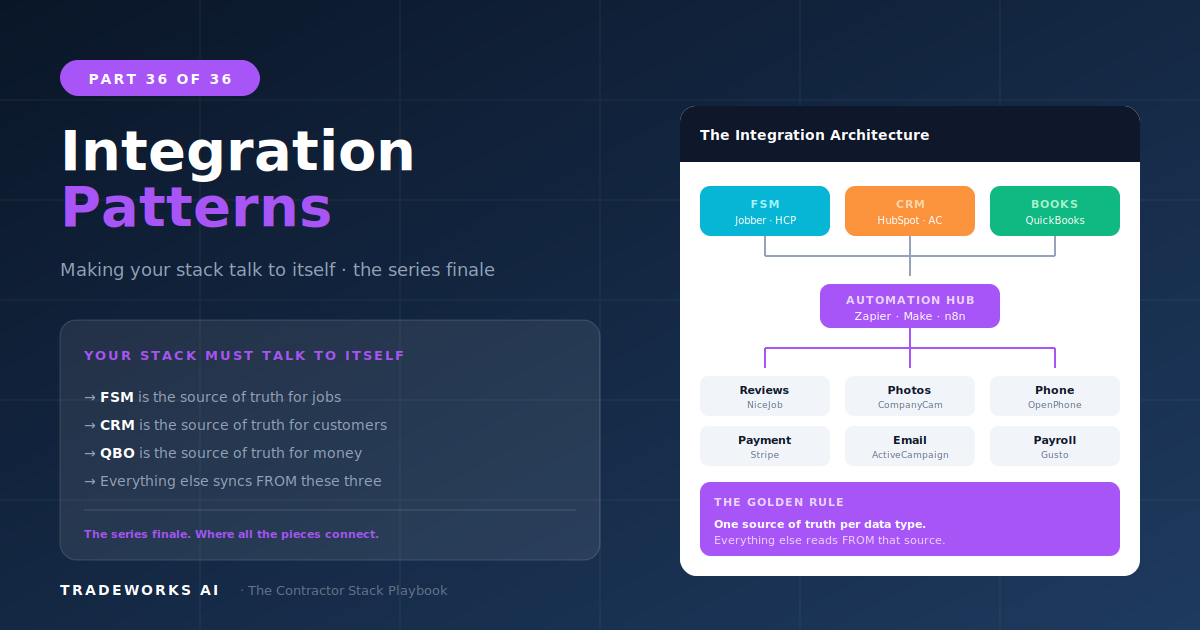
The seven integration patterns that connect a contractor’s software stack into a unified system are: job complete triggers (review reques...