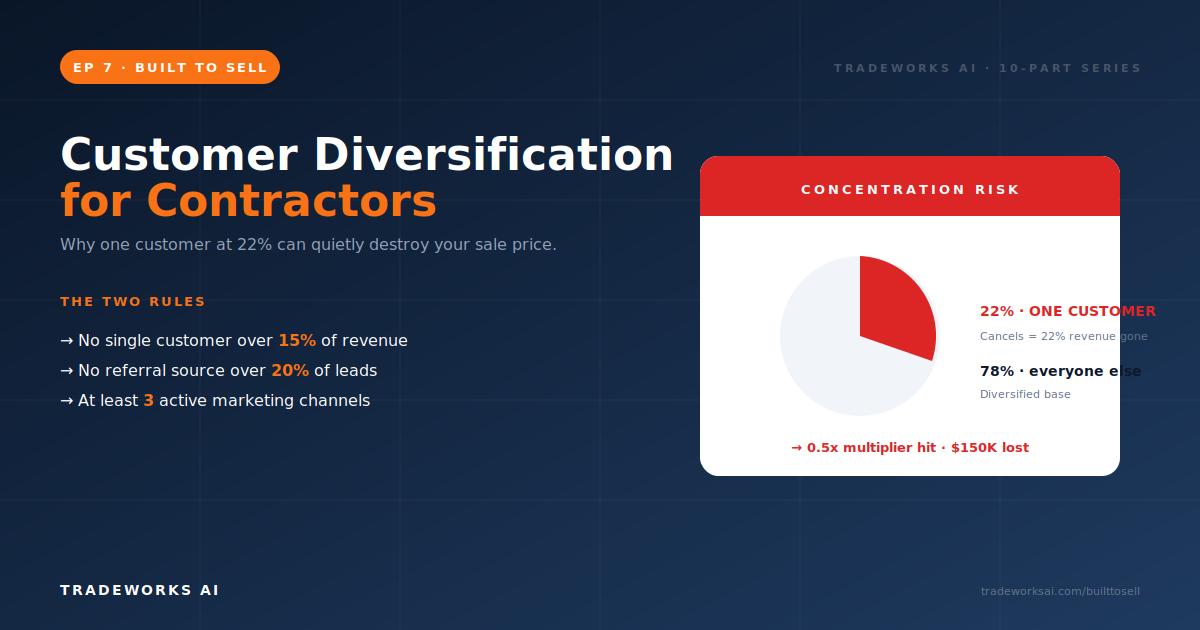
Built to Sell · Part 7
Customer Diversification & Concentration Risk
Continue the Built to Sell series with Part 7 of 10.
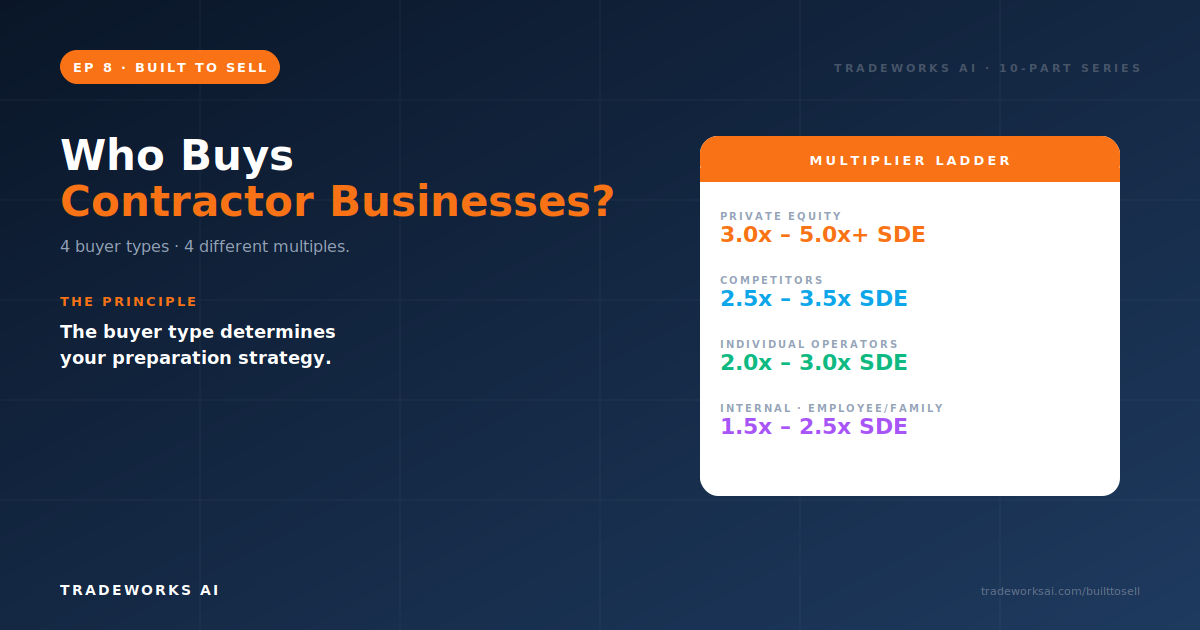
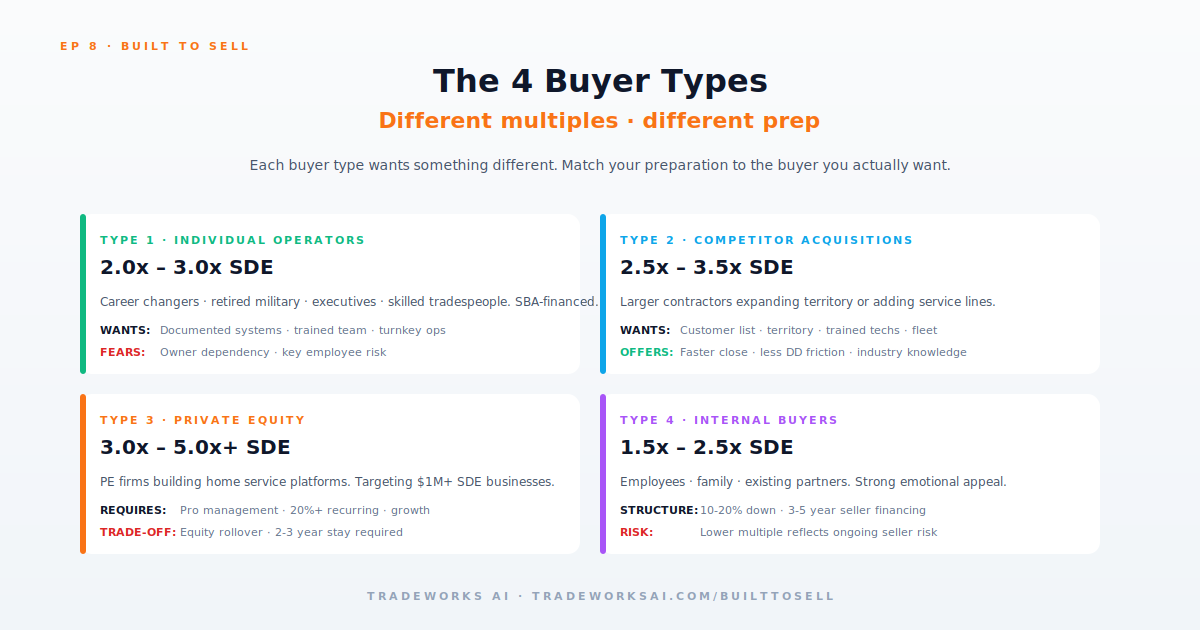
Four buyer types purchase contractor businesses. Individual operators (career changers, retired military, corporate refugees) pay 2x to 3x SDE and want turnkey operations with documented systems. Competitor acquisitions (larger contractors in the same market) pay 2.5x to 3.5x SDE and want customer lists, territory, and trained employees. Private equity firms pay 3x to 5x+ SDE but target businesses above $1 million SDE with professional management, recurring revenue, and growth potential. Internal buyers (employees or family members) typically pay 1.5x to 2.5x SDE through seller-financed transactions over 3 to 5 years. The buyer type determines the preparation strategy: individual buyers need documented systems, competitors need territory value, PE needs scale metrics, and internal buyers need financing structures.
The most common buyer for contractor businesses under $1 million in value. These are career changers, retired military personnel, corporate executives seeking business ownership, and skilled tradespeople ready to own rather than work for someone else. They typically use SBA loans for acquisition financing. They pay 2x to 3x SDE. What they want: a business they can walk into and operate on day one. Documented systems, trained employees, an established customer base, and a brand that does not depend on the current owner. What they fear: owner dependency, messy financials, key employee risk, and the learning curve of a trade they may not know.
Larger contractors in the same market or adjacent service areas buying to expand territory, acquire customers, or absorb trained technicians. They pay 2.5x to 3.5x SDE and sometimes more for strategic value. What they want: the customer list (especially commercial accounts and maintenance plan subscribers), the geographic territory, trained employees they can retain, and the fleet/equipment at fair value. What they offer: faster closing timelines, industry knowledge that reduces due diligence friction, and the ability to integrate operations quickly.
PE firms have entered the home service space aggressively. They build platforms by acquiring a base business and then adding on smaller acquisitions. They typically target businesses above $1 million SDE with professional management already in place, recurring revenue exceeding 20%, demonstrable growth trajectory, and multiple service lines or locations. They pay 3x to 5x+ SDE, sometimes significantly more for platform acquisitions. The trade-off: PE buyers often require the seller to retain equity and stay involved for 2–3 years post-sale. The initial payout is larger, but the full exit takes longer.
Employees, family members, or existing partners. The emotional appeal is strong—the legacy continues, employees keep their jobs, and the community relationship persists. The financial reality is harder. Internal buyers rarely have the capital for a full purchase. Most internal sales use seller financing: the buyer pays 10–20% down and the remainder over 3–5 years from business cash flow. Typical multiples: 1.5x to 2.5x SDE. The lower multiple reflects the seller’s ongoing financial risk during the financing period.
The preparation strategy depends on the target buyer. For individual operators: maximize documentation, systems, and turnkey readiness. For competitors: emphasize territory value, commercial accounts, and maintenance plan subscriber counts. For PE: build toward professional management, recurring revenue above 20%, and demonstrable growth metrics. For internal buyers: begin the conversation early, establish a transition timeline, and structure financing terms that protect both parties. A business broker can help identify and qualify the right buyer type.
Engage a business broker specializing in home service businesses. Broker commissions typically range from 8–12% of the sale price. Alternatively, competitors and PE firms can be approached directly, though professional representation is recommended.
The typical timeline from listing to closing is 6–18 months. Businesses with clean documentation, strong financials, and low owner dependency sell faster.
Most owners assume their business is worth more than the market would pay. The Sellability Audit grades your business against the five pillars of value — owner independence, recurring revenue, documented systems, clean financials, and customer diversification — and gives you a realistic valuation range plus the highest-leverage actions to lift your multiple.
Continue the Built to Sell series with Part 7 of 10.
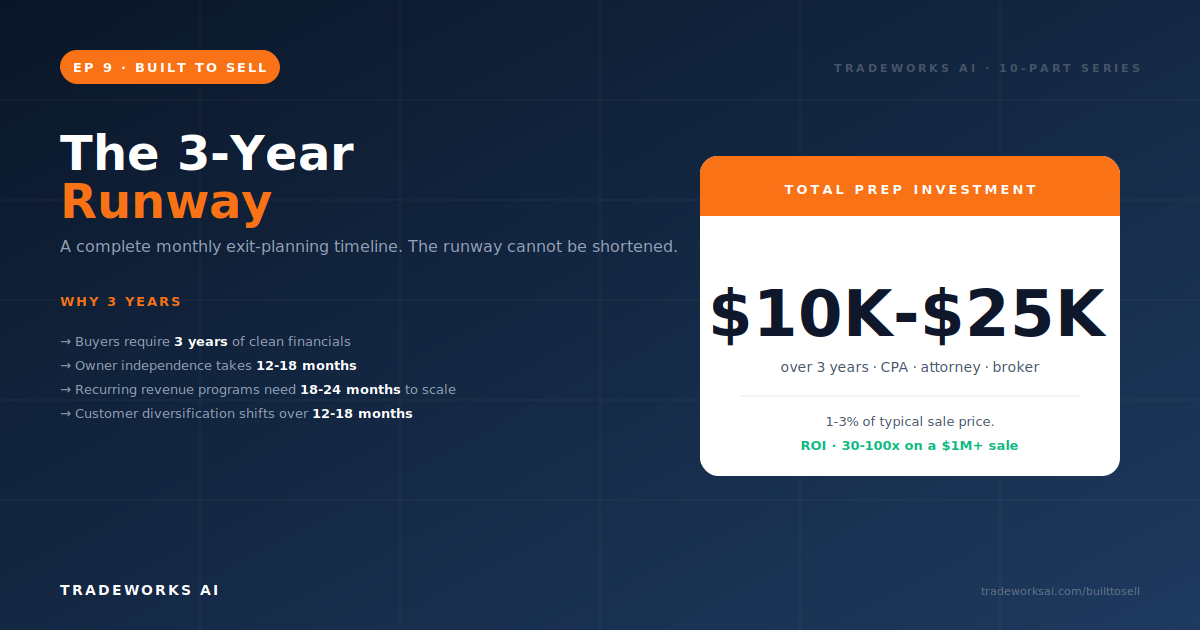
Continue the Built to Sell series with Part 9 of 10.