
Built to Sell · Part 9
The 3-Year Runway: Complete Exit Planning Timeline
Continue the Built to Sell series with Part 9 of 10.
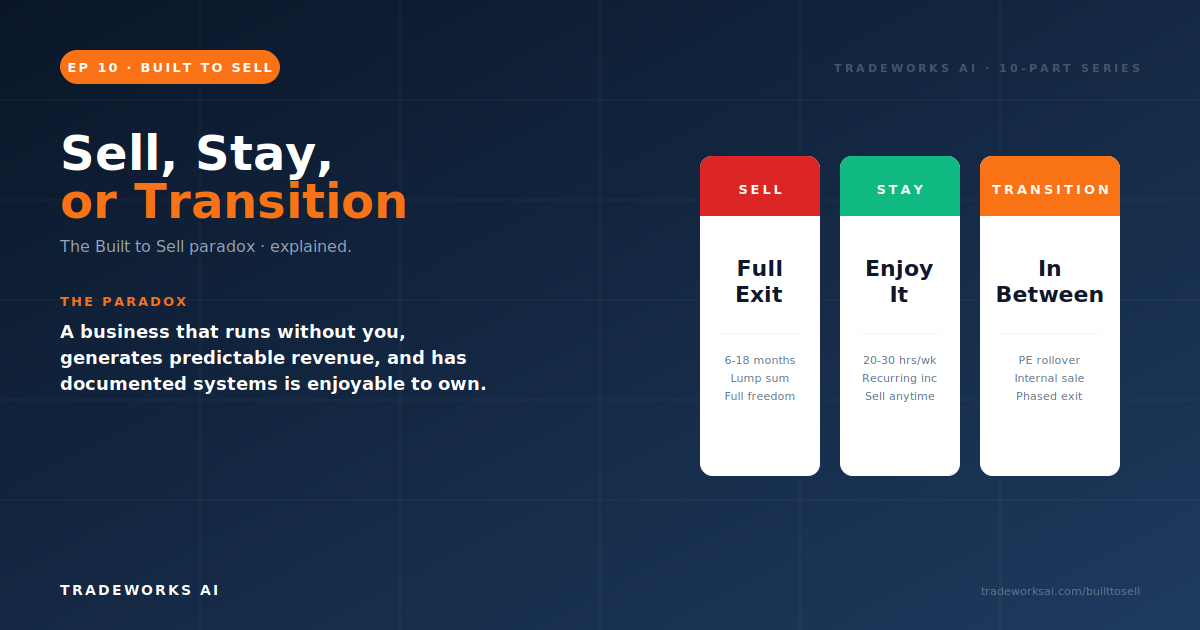
Contractor business owners face three exit options. Sell outright through a business broker (8–12% commission, 6–18 month process) to individual operators, competitors, or private equity at 2x–4x+ SDE. Stay and enjoy the business you built—if the five pillars are in place, the owner works 20–30 hours per week with predictable income and real vacations while retaining the option to sell at any time. Transition gradually through a partial sale with equity rollover to PE, an internal transition via seller financing over 3–5 years, or a phased exit by hiring a GM and reducing involvement to 10 hours weekly. The Built to Sell paradox: the process of building a sellable business creates a business worth keeping. The third option—a business that works without you—is available only to owners who did the preparation work.
You started this series because your business depended entirely on you. Over nine parts, you learned how to value it, score its sellability, build owner independence, create recurring revenue, document your systems, clean your financials, diversify your customers, identify buyer types, and construct a 3-year runway. Here is the paradox: the process of building a business worth selling creates a business worth keeping. A business that runs without you, generates predictable revenue, and has documented systems is not just sellable. It is enjoyable. The 60-hour weeks become 30. The constant firefighting becomes strategic oversight. The vacation you have not taken in years becomes possible. The decision is no longer sell or grind. It is sell, stay, or something in between.
The full exit. Engage a business broker, list the business, qualify buyers, negotiate terms, close the deal. Timeline: 6 to 18 months from listing to closing. Broker commission: 8 to 12%. Attorney fees: $5,000 to $15,000. What you get: a lump sum (minus broker fees and taxes) and freedom. What you lose: the identity of being a business owner, the relationships with your team and customers, and the ongoing income stream. The tax implications are significant—capital gains, asset allocation, depreciation recapture—and require professional guidance from a CPA and tax attorney before closing.
The paradox fulfilled. You built a sellable business but choose not to sell. You work 20 to 30 hours per week. Revenue is predictable through recurring maintenance plans. A management team handles daily operations. You take vacations. The option to sell exists whenever you want it. This is not a failure to follow through. This is the third option that only exists because you did the work. A business that gives you freedom AND generates wealth is the best of both worlds.
Three variations. First, a partial sale with equity rollover: sell a majority stake to a PE firm, retain 20–30% equity, and participate in the larger platform’s growth. The initial payout is smaller but the retained equity often yields a second exit at a higher multiple. Second, an internal transition: sell to a key employee or family member through seller financing over 3 to 5 years. The legacy continues, but the financial risk extends over the financing period. Third, a phased exit: hire a general manager, reduce your involvement to 10 hours per week of strategic oversight, and draw a reduced salary plus distributions. Not a sale, but functionally retired from operations.
Three questions guide the decision. First, what do you want your daily life to look like in two years? If the answer involves no involvement in the business, sell. If the answer involves 20 hours of enjoyable strategic work, stay. If the answer involves partial involvement with reduced risk, explore the middle options. Second, what does the financial math say? A sale provides a lump sum. Staying provides ongoing income. Model both scenarios with your financial advisor. Third, what does your team need? A strong management team may thrive under new ownership. They may also thrive under your continued but reduced leadership. Consider their futures alongside yours.
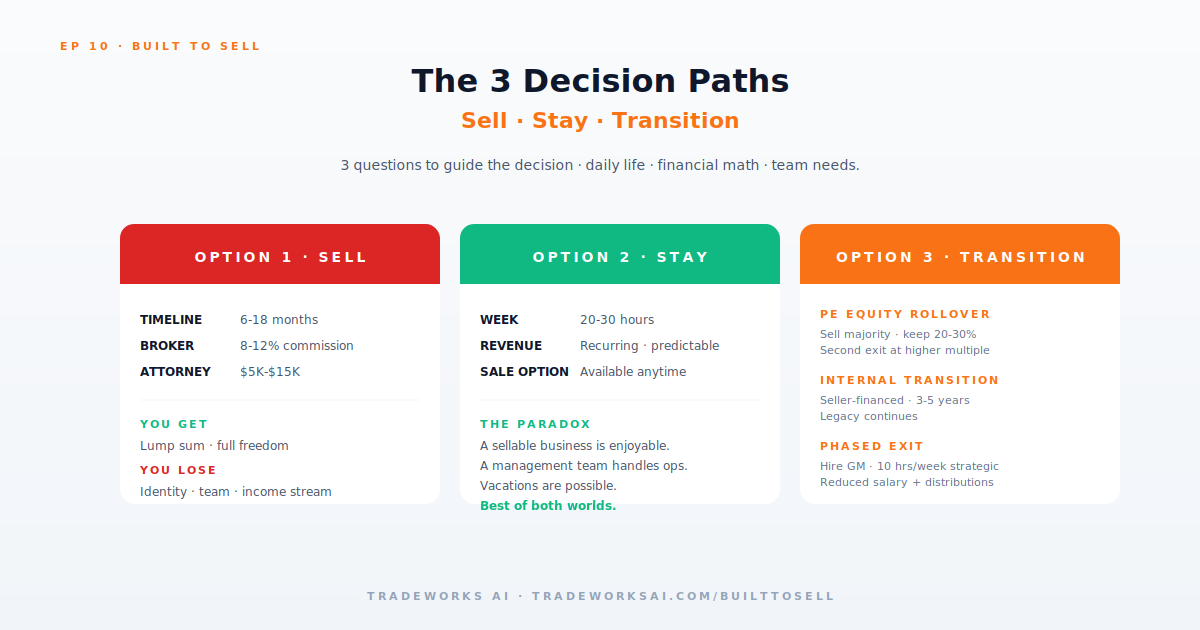
The Built to Sell paradox is that the process of building a sellable business—owner independence, recurring revenue, documented systems—creates a business that is also enjoyable to own and operate. The owner gains the freedom to sell AND the freedom to stay.
Yes. Partial sales to private equity firms, employee stock ownership plans (ESOPs), or key employees through structured transactions are common in the contractor space. A business attorney and financial advisor are essential for structuring these deals.
Most owners assume their business is worth more than the market would pay. The Sellability Audit grades your business against the five pillars of value — owner independence, recurring revenue, documented systems, clean financials, and customer diversification — and gives you a realistic valuation range plus the highest-leverage actions to lift your multiple.
Continue the Built to Sell series with Part 9 of 10.
Continue the Built to Sell series with Part 1 of 10.