Marketing & Psychology · Part 8
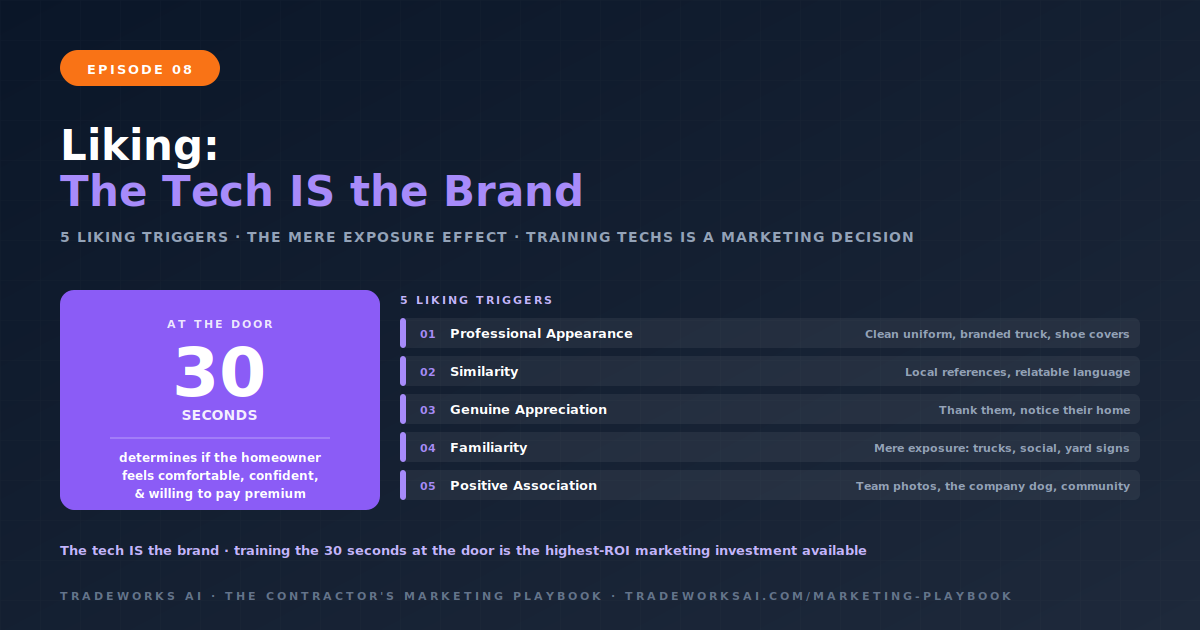
Liking for Contractors: The Tech IS the Brand — Why Training Technicians to Be Likable Is a Marketing Decision
Continue the Marketing & Psychology series with Part 8 of 15.
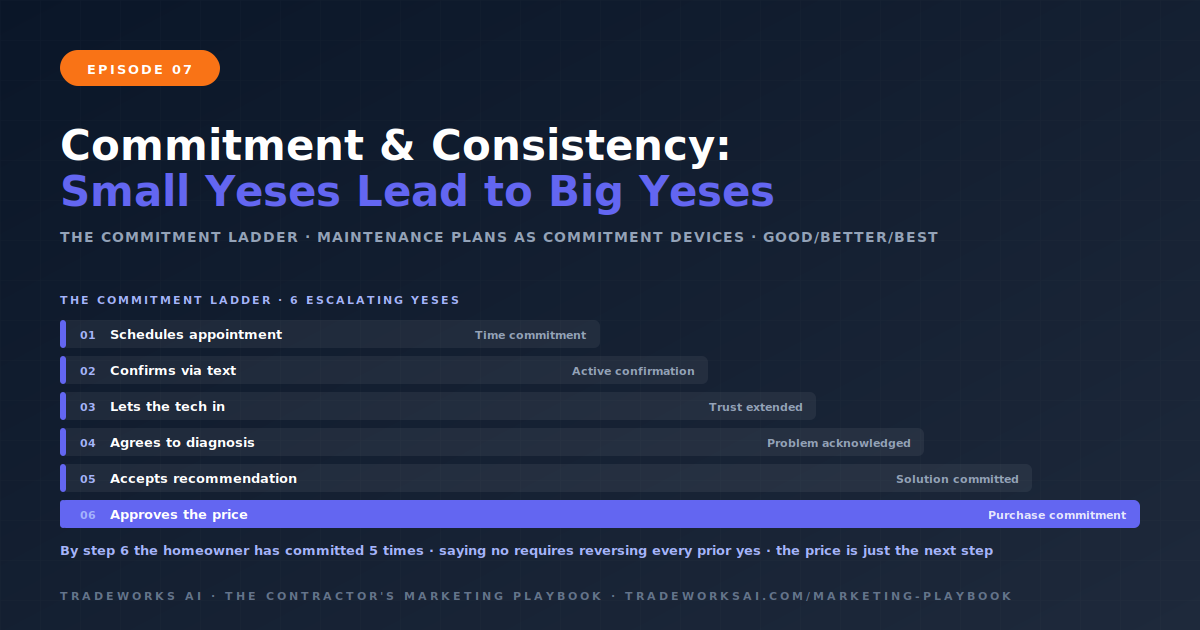
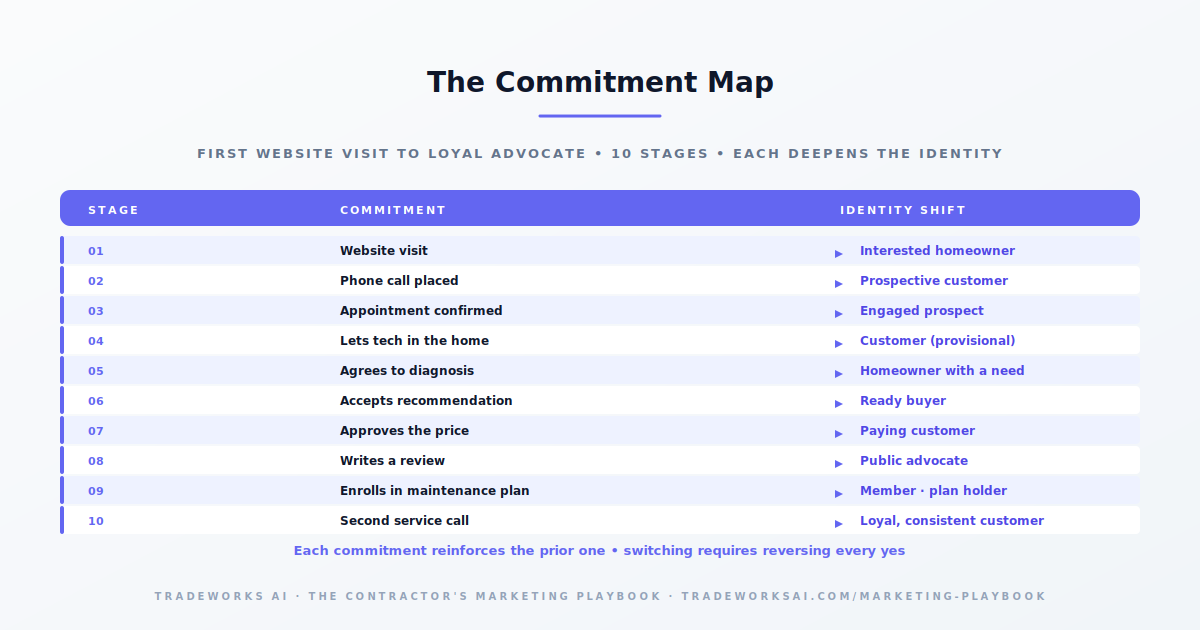
Commitment and Consistency is the psychological principle that once people commit to something—even a small commitment—they behave consistently with that commitment. For contractors, the most powerful application is the Commitment Ladder: the estimate process structured as a series of small yeses that build toward the buying decision. The homeowner says yes to scheduling the appointment, yes to letting the tech in, yes to the diagnosis, yes to the recommendation—by the time the price is presented, they have committed four times. The price becomes the natural next yes, not a cold decision. Maintenance plans are commitment devices: the enrolled homeowner’s identity becomes a customer of this company, making switching psychologically inconsistent. Google reviews are public commitments—the reviewer is statistically more likely to rehire you because they publicly endorsed you. The Commitment Map traces every yes from first contact to lifelong loyalty.
Cialdini’s Commitment and Consistency principle is based on a fundamental human need: the need to be consistent with our own actions, statements, and self-image. Once someone takes a position or makes a choice—even a small one—they experience internal pressure to behave consistently with that commitment. This pressure is not rational. It is automatic. A homeowner who confirms an appointment via text (a micro-commitment) is more likely to be home when the tech arrives than a homeowner who only received a confirmation email. A homeowner who agrees to a free inspection (a small yes) is more likely to approve a repair than a homeowner who received only a cold estimate. Each yes builds on the previous yes. The commitment compounds. By the time the homeowner reaches the price, they have already decided—they just have not said the final number yet.
Most contractors think of the estimate as a price presentation: you diagnose the problem, calculate the cost, and present a number. The homeowner then decides yes or no based on the price. This is a cold decision—the homeowner evaluates the price in isolation. The Commitment Ladder reframes the estimate as a series of escalating commitments, each one building on the last.
The homeowner who has committed at every step experiences the price not as a new decision but as the natural continuation of decisions already made. This is not manipulation. The homeowner genuinely needed the repair, genuinely agreed the problem existed, and genuinely accepted the recommendation. The Commitment Ladder simply structures the process so each genuine yes reinforces the next.
A maintenance plan is not just a revenue tool. It is a commitment device. When a homeowner enrolls in a $15 per month maintenance plan, they are making a public, ongoing, financial commitment to your company. That commitment changes their self-image: they become a member, a plan holder, a customer of this company. This identity shift has profound psychological consequences. When their AC breaks next summer, they do not search Google. They call their maintenance plan provider—because that is who they are. Switching to a competitor is psychologically inconsistent with their identity as a plan member. They would have to cancel a plan they committed to, which feels like admitting they made a bad decision. Consistency pressure keeps them with you.
The maintenance plan also creates commitment through recurring micro-transactions. Each $15 monthly payment is a renewal of the commitment. Each annual tune-up visit reinforces the relationship. Each reminder text is a touchpoint that reaffirms: I am a customer of this company. This is why maintenance plans have retention rates dramatically higher than one-time service relationships—the commitment compounds with every interaction.
A Google review is a public commitment. The homeowner has stated, in writing, for anyone to see, that they recommend your company. This public statement creates consistency pressure: having publicly endorsed you, the reviewer is psychologically more likely to hire you again. Recommending a competitor after writing a positive review would be inconsistent with their public position. Public commitments are stronger than private commitments because the social stakes are higher—the homeowner’s reputation is now tied to their endorsement of your company. This is why a review strategy (Episode 4’s Social Proof) serves double duty: reviews attract new customers through social proof AND retain existing customers through commitment.
The Good/Better/Best pricing framework is a commitment structure. By presenting three options (a basic repair, a mid-tier solution, and a premium package), you guide the homeowner through a commitment to the level of service, not just a yes or no on a single price. The homeowner who chooses Better has committed to more than the minimum—they have positioned themselves as someone who values quality. That self-image carries forward: on the next service call, they are more likely to choose Better again because it is consistent with who they have decided they are. Good/Better/Best also reduces the cold yes/no dynamic. Instead of is this price acceptable? the question becomes which level of service reflects my priorities? The homeowner is committing to an identity, not just approving a number.
Each row is a deeper commitment. Each commitment reinforces the identity. By the bottom of the map, the homeowner is not evaluating you against competitors. They are a member of your company’s ecosystem. Switching would require reversing commitments they have made at every level.
The estimate process structured as a series of escalating yeses: schedule the appointment, confirm via text, let the tech in, agree to the diagnosis, accept the recommendation, approve the price. By step 6, the homeowner has committed 5 times. The price becomes the natural next yes, not a cold decision.
Maintenance plans are commitment devices. The enrolled homeowner’s identity shifts to plan member / customer of this company. Switching to a competitor is psychologically inconsistent with this identity. Each monthly payment and annual tune-up reinforces the commitment. Retention rates are dramatically higher than one-time service relationships.
Reviews are public commitments. Having endorsed your company in writing for anyone to see, the reviewer is more likely to hire you again because choosing a competitor would be inconsistent with their public position. Reviews serve dual purpose: attracting new customers through social proof and retaining existing ones through commitment.
No. Each yes in the ladder is genuine: the homeowner genuinely needs the repair, genuinely agrees the problem exists, and genuinely accepts the recommendation. The ladder structures the process so each genuine yes reinforces the next. It does not create false commitments. It aligns the sales process with the homeowner’s actual decision progression.
Tactics change every quarter. Psychology has not changed in 50,000 years. The Influence Audit grades your marketing across the 7 principles — Reciprocity, Commitment, Liking, Social Proof, Authority, Scarcity, and Unity — and identifies the one principle that, when activated, lifts every other channel you run.
Continue the Marketing & Psychology series with Part 8 of 15.
Continue the Marketing & Psychology series with Part 9 of 15.