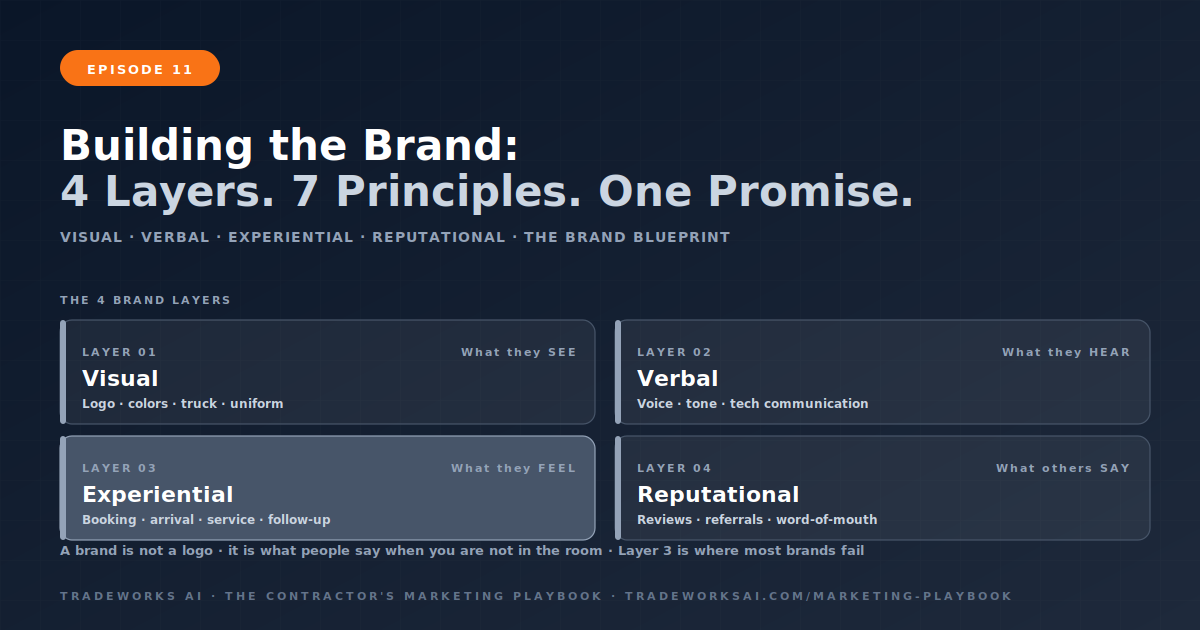
Marketing & Psychology · Part 11
Building Your Contractor Brand: A Brand Is Not a Logo — It Is the Sum of 7 Principles
Continue the Marketing & Psychology series with Part 11 of 15.
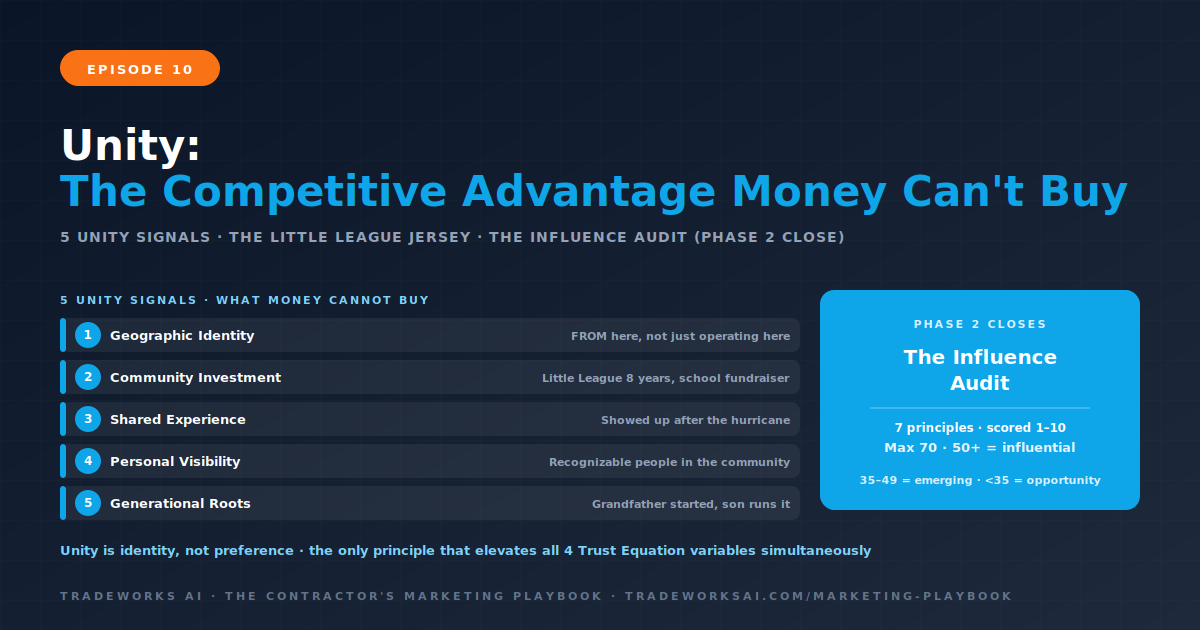
Unity is Cialdini’s seventh principle and the most powerful for local contractors because it cannot be replicated by national competitors. Unity is not liking—it is identity. The homeowner does not merely prefer you. They feel you are one of them. The Little League jersey with your company logo. The school fundraiser your team donated to. The storm you showed up to help recover from. These are identity signals: we are from here, we live here, our kids go to school here. A national franchise can buy ads in your market. They cannot buy 20 years of coaching the same Little League team. Unity operates through 5 signals: geographic identity, community investment, shared experience, personal visibility, and generational roots.
A homeowner in Riverview stands at a Saturday morning Little League game. Their child steps up to bat wearing a jersey that says Bennett’s HVAC on the back. The homeowner has seen that name for 8 seasons. They have chatted with the owner during rain delays. They have watched his daughter grow up alongside their son. The AC dies on Monday. They do not search Google. They do not compare prices. They call Bennett’s HVAC. Not because Bennett’s has the best reviews or the lowest price. Because Bennett’s is one of us. That is Unity—a bond deeper than preference, trust, or even loyalty. It is identity.
Liking (Episode 8) means the homeowner prefers you. Unity means the homeowner identifies with you. They see you as part of their in-group. The distinction matters because liking can be overcome by a competitor with a better offer. Unity cannot. A homeowner who likes Contractor A but feels Contractor B is one of us will choose B even at a higher price. Unity overrides rational comparison because it operates at the level of identity. You do not comparison-shop within your own family.
National franchises can outspend any local contractor. They can buy Google Ads, TV, and direct mail at scale. But they cannot buy Unity. They cannot replicate 8 years of Little League. They cannot recreate the memory of the owner sandbagging driveways during the flood. Unity is accumulated through time, presence, and genuine participation. It is the competitive advantage that makes a local contractor structurally immune to national competition.
Unity is the only principle that simultaneously elevates all 4 Trust Equation variables. Credibility: 20 years of community service is earned. Reliability: showing up after every storm is demonstrated. Intimacy: knowing the homeowner because your kids play together is genuine. Self-Orientation (inverted): investing in the community without a visible sales motive. All four. No other principle does this.
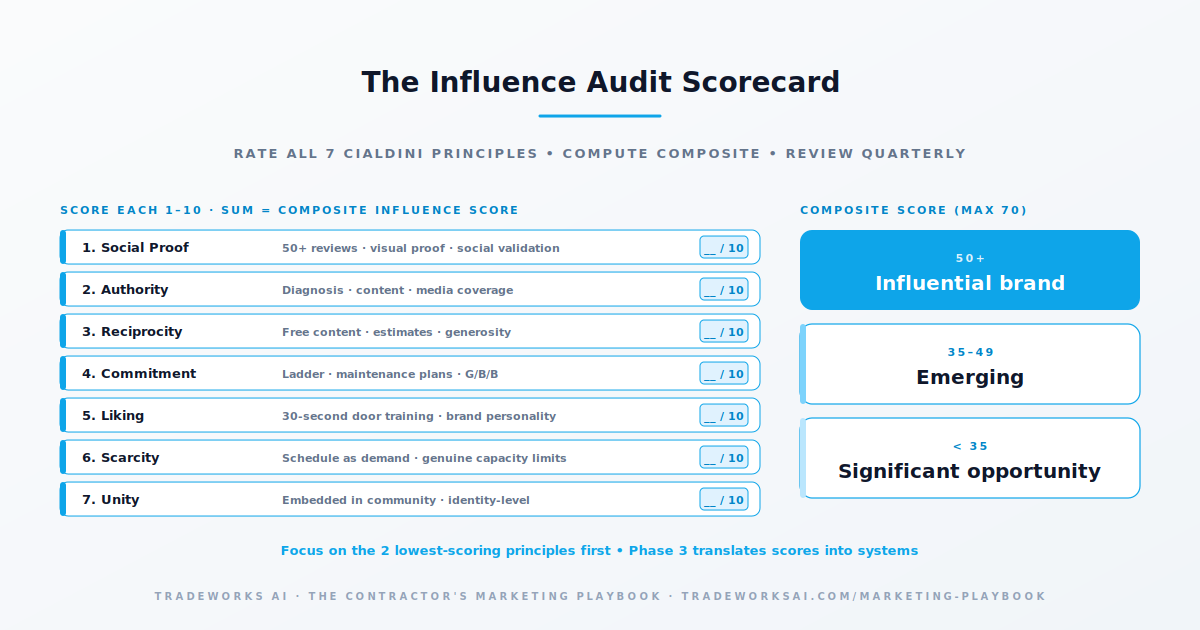
Phase 2 taught 7 principles. The Influence Audit scores each 1 to 10 for a Composite Influence Score (maximum 70).
50+: influential brand. 35-49: emerging. Below 35: significant opportunity. Phase 3 translates scores into systems.
People favor those who share their identity. For contractors: the homeowner feels you are one of us. Unity overrides rational comparison because it operates at identity level.
Liking = preference (breakable by better offer). Unity = identity (permanent). You do not comparison-shop within your own family.
Yes. Geographic identity and community investment are available immediately. Sponsor a team. Attend events. Show up after storms. 4 of 5 signals buildable within 1-2 years.
Score all 7 Cialdini principles 1-10. Max 70. 50+ = influential. Identifies strengths and gaps for Phase 3 strategy.
Tactics change every quarter. Psychology has not changed in 50,000 years. The Influence Audit grades your marketing across the 7 principles — Reciprocity, Commitment, Liking, Social Proof, Authority, Scarcity, and Unity — and identifies the one principle that, when activated, lifts every other channel you run.
Continue the Marketing & Psychology series with Part 11 of 15.
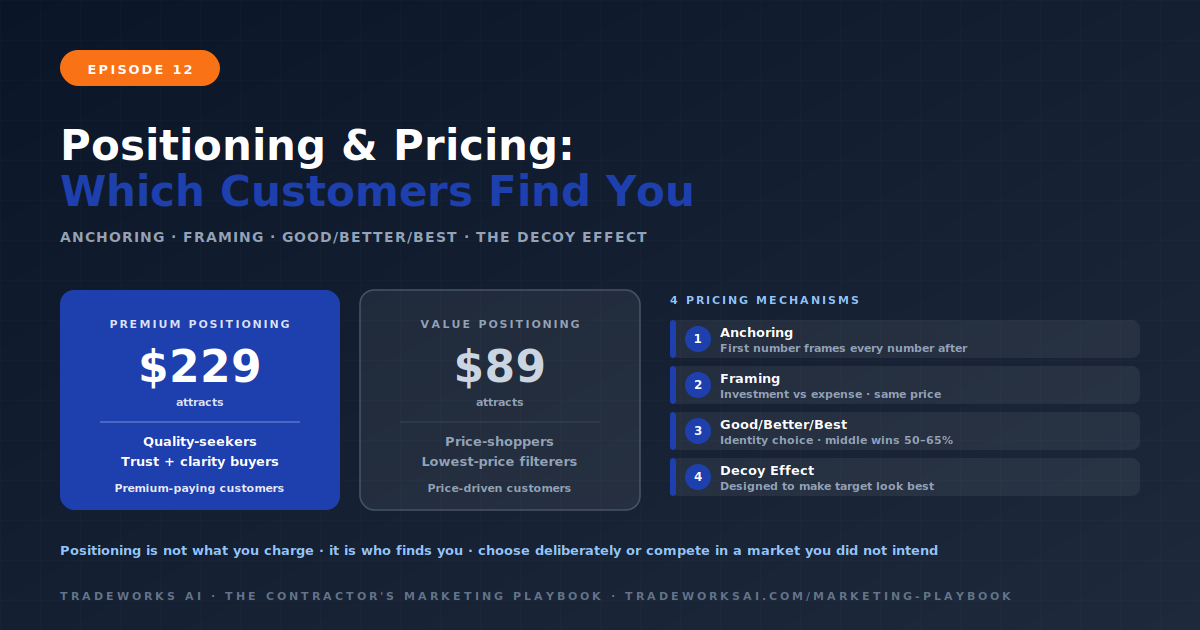
Continue the Marketing & Psychology series with Part 12 of 15.