Email Marketing · Part 5
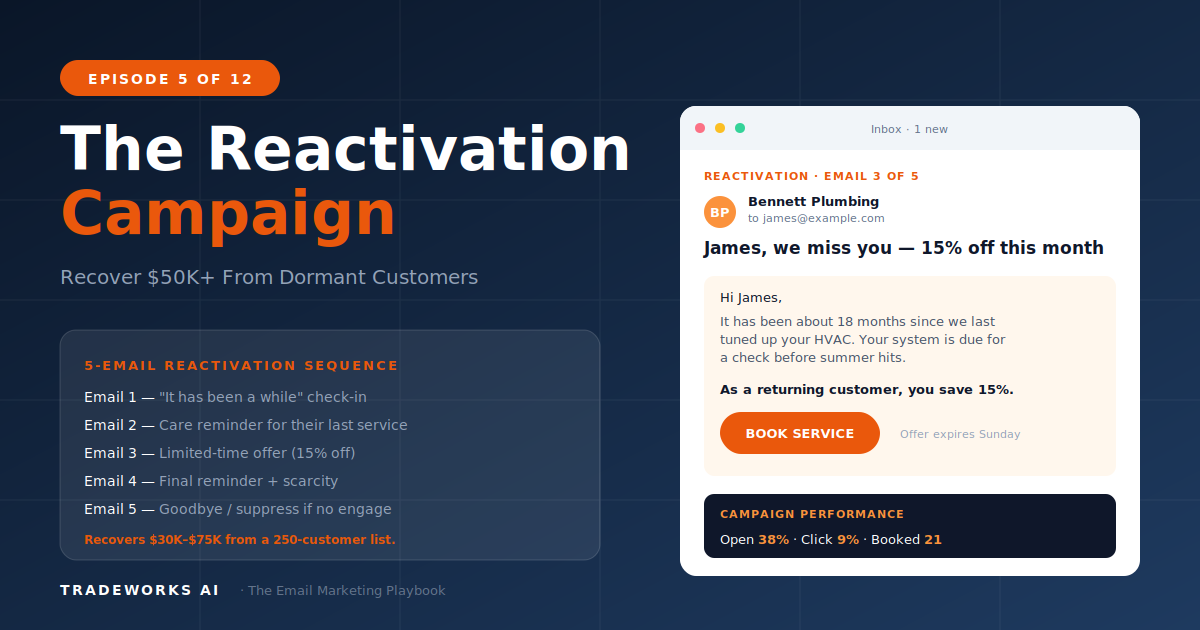
The Reactivation Campaign
5-email sequence that recovers $30K-$75K from dormant customers.
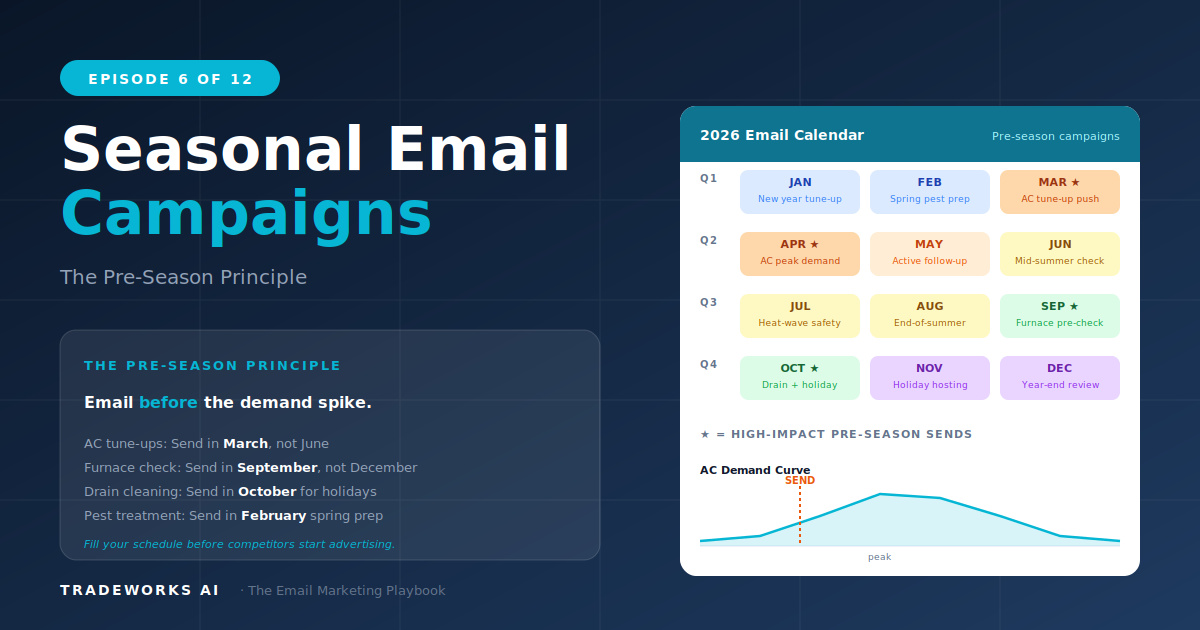
The pre-season principle states that the contractor who fills 60 to 80% of their schedule before peak season starts does not compete on price during the season. Seasonal email campaigns are the mechanism that makes this possible. A four-email pre-season sequence launched 6 to 8 weeks before your peak period generates 15–25% of your seasonal bookings before a single competitor runs a Facebook ad.
For Florida HVAC contractors, this means launching cooling-season campaigns in early March. For plumbers, spring campaigns launch in mid-February. For electricians, storm-season campaigns begin in April. The sequences combine early-bird pricing, capacity scarcity, and educational content to convert existing customers into pre-booked appointments.
During peak season, every contractor is advertising. Google Ads CPCs spike 30–60%. Facebook ad costs rise. Customer attention fragments across dozens of competing offers. You are fighting for attention in the most expensive, most crowded window of the year.
Pre-season flips this dynamic. Six to eight weeks before peak, most competitors are not yet marketing aggressively. Customer inboxes are quieter. And homeowners who book early feel like they are being proactive rather than reactive — which is a fundamentally different psychological state. A customer calling in July because their AC died is stressed and price-shopping. A customer booking in March because you reminded them about maintenance feels responsible, grateful, and loyal.
The economics:
Optimized for Florida and Gulf Coast markets. Adjust 2–4 weeks earlier for northern markets.
Runs over 18 days. Targets active and warm customer segments (not dormant contacts — those got the Reactivation Campaign in Part 5).
Goal: Educate and create awareness of the upcoming seasonal need.
Subject lines:
Body: Open with a specific, local, seasonal fact. For HVAC in Tampa: "Average high temperatures in Tampa hit 90 degrees by late May and stay there through September. Your AC system runs 8 to 12 hours per day during that stretch." Provide 2–3 specific things a seasonal service catches. No pitch. Pure education.
Goal: Convert the most responsive customers with a time-limited pre-season incentive.
Body: Frame it as priority access and preferred pricing for existing customers. "We open pre-season scheduling for existing customers two weeks before the general public. You get preferred pricing ($XX instead of $XX) and first pick of appointment times. We limit pre-season spots to 50 per week." The scarcity is real, not manufactured. Pricing difference: $25–50 off, or a free add-on bundled in.
Subject lines:
Body: Lead with real booking data. "We have booked 127 pre-season tune-ups in the past two weeks. March and early April appointments are 60% full." Include a short testimonial from a customer who booked early and avoided a peak-season emergency. Add a countdown if your platform supports it.
Body: Be direct: the early-bird window is closing. After this date, seasonal service returns to standard pricing and appointment availability shrinks. Reference last year's wait times. Final CTA with phone number and booking link.
Not every customer gets every seasonal campaign:
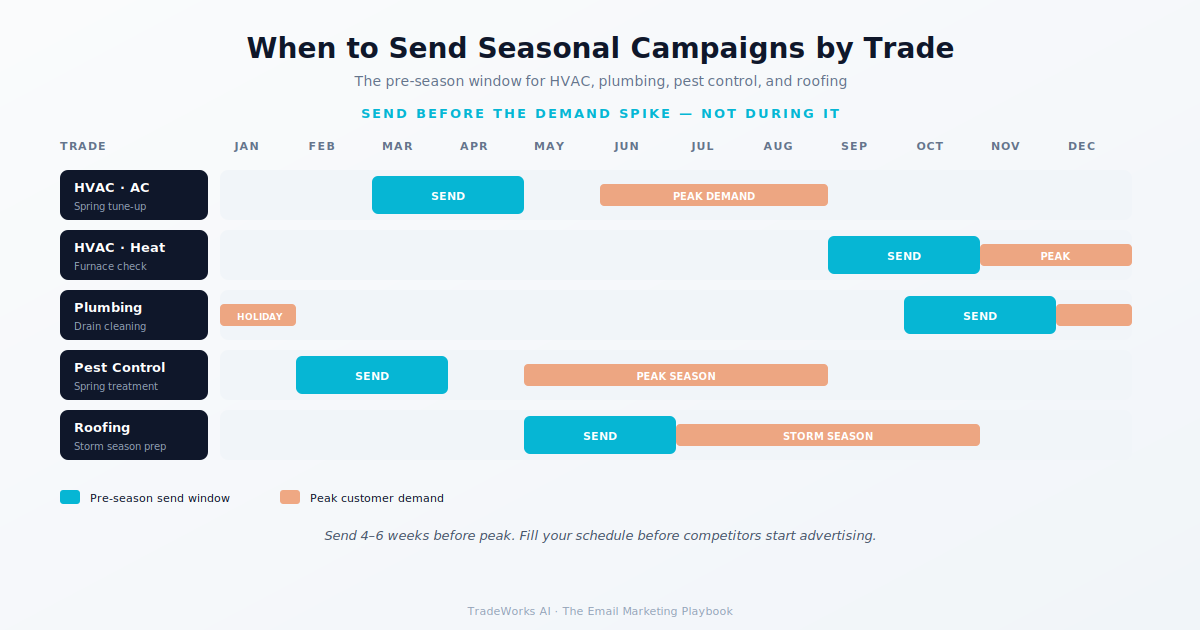
Seasonal campaigns are how your schedule fills before competitors start advertising. Lower acquisition cost. Higher margins. Customer relationships strengthened, not strained. Build the calendar once. Run the 4-email sequence twice a year per trade. Read Part 7 next: converting one-time customers into recurring revenue.
Keep it modest: $25–50 off a standard service or a free bundled add-on worth $30–60 in retail value. The goal is to create a reason to act now, not to devalue your service. A $40 savings on a $129 tune-up is compelling without training customers to wait for discounts.
Yes, but a different version. Plan members do not need pricing incentives. They need a scheduling reminder: 'Your included seasonal tune-up is available to book.' This prevents plan members from forgetting to use their benefit, which reduces cancellations.
Run trade-specific campaigns to trade-specific segments. A customer who had AC service gets the HVAC campaign. If a customer has used both services, send both campaigns but stagger them by at least 7 days to avoid inbox fatigue.
Yes, but to different segments. Active customers get seasonal campaigns. Dormant customers get the Reactivation Campaign from Part 5. Never send both to the same contact simultaneously.
Post-season campaigns work well as thank-you sequences: 'Another summer survived. Here is a winterization checklist for your AC.' These transition into the next season's pre-campaign cycle.
Set genuine capacity limits and stop promoting once they are hit. The worst outcome is selling 80 pre-season spots when you can only deliver 50. Part 11 covers the dashboard that tracks bookings against capacity in real time.
Contractors who don't run pre-season campaigns spend 30-60% more on Google Ads to fill the same calendar. Our free audit maps your seasonal calendar and the campaigns you should be running.
5-email sequence that recovers $30K-$75K from dormant customers.
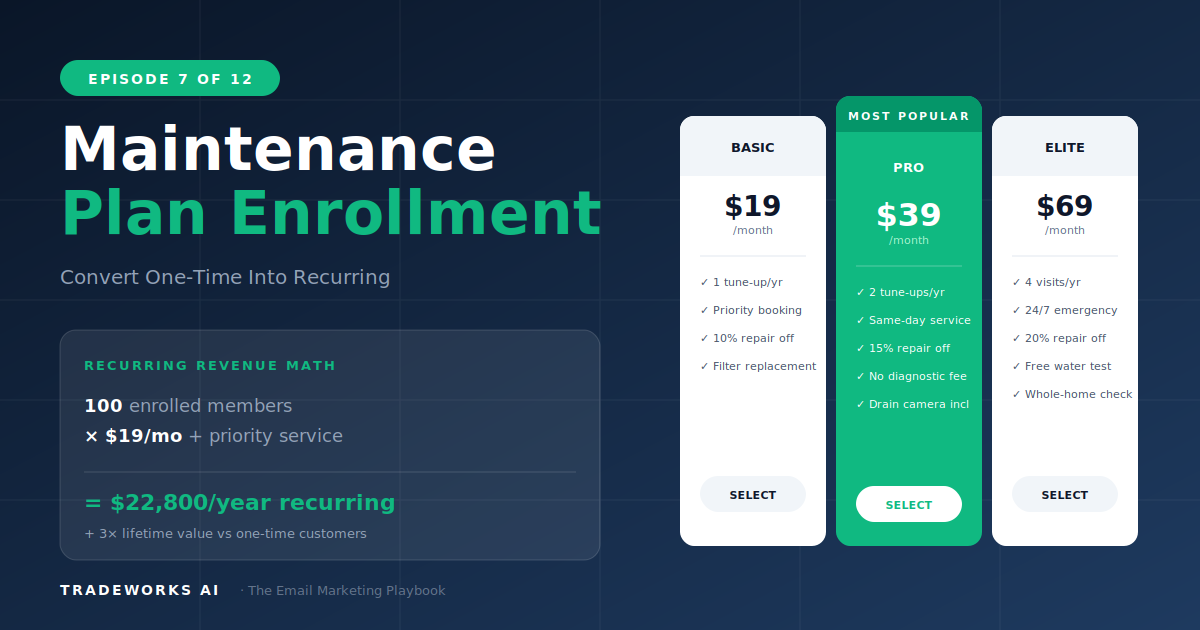
3-email post-service sequence that converts one-time to recurring.