Video Marketing · Part 8
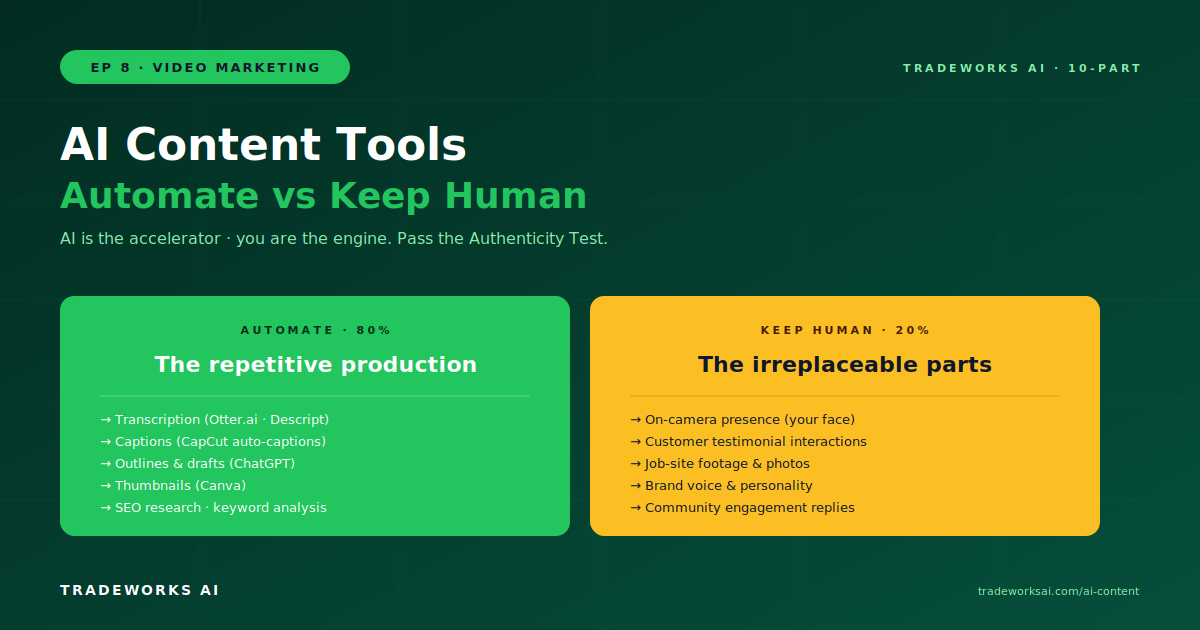
AI Content Tools: What to Automate & Keep Human
Continue the Video Marketing series with Part 8 of 10.
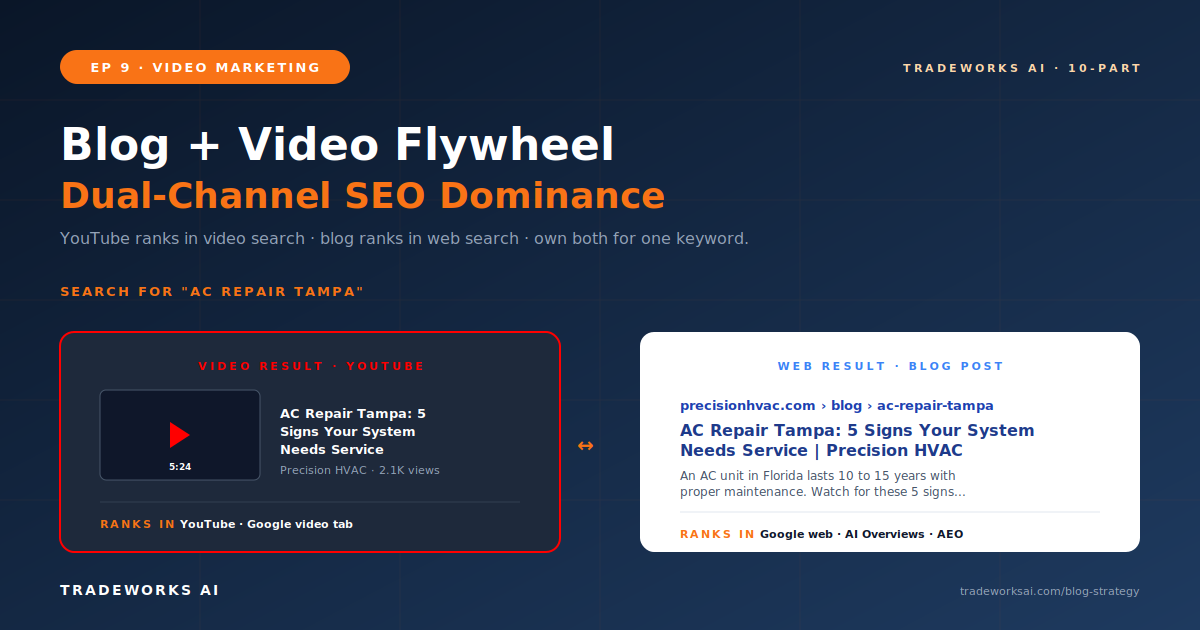
Contractor blogging for SEO follows a structured article format: an AEO opening paragraph directly answering the search query in the first 100 to 150 words, an H2/H3 heading hierarchy matching keyword search patterns, 800 to 2,000 words of unique content per article, a FAQ section with FAQPage schema markup, and internal links to related service pages and other blog posts. The video-to-blog workflow from Episode 7’s repurposing system produces blog posts from YouTube video transcripts in approximately 45 minutes. The Blog plus Video Flywheel creates a reinforcing loop: the YouTube video ranks in video search, the blog post ranks in web search, each links to the other, and together they dominate both search channels for the target keyword. Publishing cadence: one blog post per week, aligned with the weekly YouTube video.
Blog posts rank in Google web search. YouTube videos rank in Google video search and YouTube search. Together, they create dual-channel keyword dominance. A contractor who publishes a YouTube video titled AC Repair Tampa: 5 Signs Your System Needs Service and a corresponding blog post targeting the same keyword can appear in both web results and video results for the same search query. The blog post also serves as a landing page for the video, capturing visitors who prefer to read rather than watch.
Every contractor blog post follows a consistent structure. AEO Opening (first 150 words): directly answer the search query in the opening paragraph. AI search engines and Google’s featured snippets pull from this section. Write it as if answering the question in a conversation. H2/H3 Hierarchy: use headings that match the way homeowners search. How long does an AC unit last in Florida? as an H2 performs better than AC Unit Lifespan because it matches the conversational search query. Body Content: 800 to 2,000 words of unique content. Include specific numbers, local references, trade-specific terminology explained in plain language, and actionable advice. FAQ Section: 3 to 5 frequently asked questions with concise answers. Mark up with FAQPage schema for rich snippet eligibility. CTA: phone number, booking link, and a specific next-step offer at the end of every article.
The most efficient way to create blog content is to start with a video. Film the YouTube video using your expertise and natural speaking style. Transcribe the video (YouTube auto-transcript or Otter.ai). Rewrite the transcript into blog format: add structure (headings, sections), remove conversational filler, add local keywords and specific data, and format for readability. The video provides the substance. The rewrite provides the SEO structure. Total blog creation time from existing video transcript: approximately 45 minutes.
The Blog plus Video Flywheel creates a reinforcing loop between two content channels. The YouTube video ranks in video search and drives viewers to the website. The blog post ranks in web search and embeds the video for visitors who want to watch. Each piece links to the other. The blog post includes Embed: Watch the full video on YouTube. The YouTube description includes Read the full article at tradeworksai.com/blog/[article]. This cross-linking strengthens both pieces in their respective search algorithms and captures audiences who prefer different content formats.
Target keywords that homeowners actually search. Use the question format: how much does, how long does, when should I, what causes, why is my. Combine service keywords with location modifiers: AC repair Tampa, plumber near Riverview FL, electrician Hillsborough County. Target one primary keyword per article. Include 3 to 5 secondary keywords naturally. Check keyword competition using free tools (Google Keyword Planner, Ubersuggest) and target keywords with moderate search volume (100 to 1,000 monthly searches) where you can realistically rank.
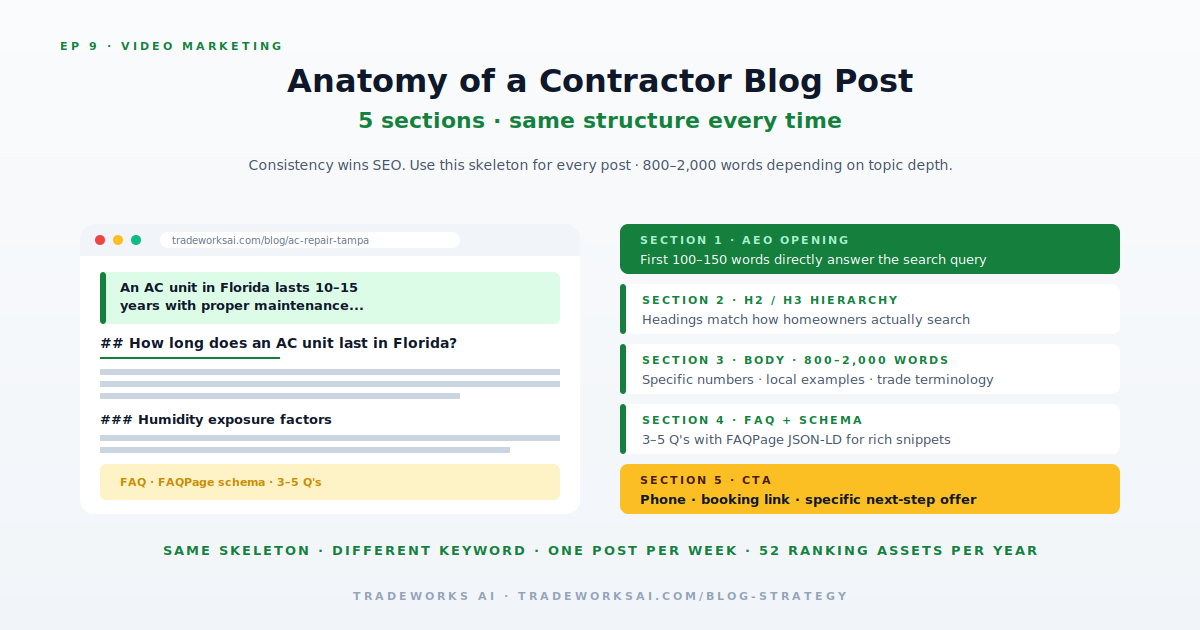
One blog post per week, aligned with the weekly YouTube video from the Content Flywheel system. Consistency matters more than frequency—one post per week for 12 months produces better results than three per week for 3 months.
800 to 2,000 words depending on topic depth. Simple how-to articles can be 800 to 1,200 words. Comprehensive guides and comparison articles should be 1,500 to 2,000 words. Length should match the depth required to fully answer the search query.
An ad stops working the day you stop paying. A video published today still drives leads in 2030. The Content Audit grades your existing content engine, identifies the highest-leverage gaps, and shows you the one weekly habit that compounds into an authority library that generates leads for years.
Continue the Video Marketing series with Part 8 of 10.

Continue the Video Marketing series with Part 10 of 10.